Tuesday, July 1, 2014

What it means to be an Inclusive Practice

I occasionally get questions about the Inclusive Practice graphic on my website, so I wanted to take a minute to explain it and highlight why I see this designation to be important. We're on the heels of Pride Month, after all.


First off, what do all those color combinations mean?

Put simply, the above color combinations are the flags of the LGBTQIA community.  The most common flag associated with this community is the rainbow flag (left), though because many feel it to only designates gay and lesbian folks, other communities created flags with their own unique color combinations.

This flag represents bisexuality. These are people who feel romantic and/or sexual attraction to two genders. I have worked with many bisexual folks, and while it is not always relevant when they're in a heterosexual relationship, my clients feel they can comfortably disclose this intimate detail about themselves if they are aware that I am an LGBTQIA-friendly provider.

This flag represents the transgender community. A transgender person is a person whose gender differs from the gender they were assigned at birth. For example, a trans man may have been "DFAB", or designated female at birth. Many trans men can become pregnant and some choose to do so. Some nurse their babies and others choose not to or cannot. I am proud to be in a growing community of birth and lactation professionals that have educated ourselves on helping transgender folks meet their infant feeding goals.
This flag represents the genderqueer and non-binary community. Some folks do not identify with a specific gender, or their gender does not fit the typical man/woman binary. Non-binary folks often use gender neutral pronouns such as they/them. Many can become pregnant and give birth, so being knowledgeable about this community is a must for an inclusive birth and breastfeeding professional.

Speaking of non-binary folks, a pansexual is a person who experiences attraction to all genders. They dislike the term "bisexual" because of the implication that there are more than two genders. Again, this is not always a relevant issue for birth workers, but this community is important to include in your awareness base!

An intersex person is a person born with reproductive or sexual characteristics that do not fit the traditional male/female binary. Contrary to popular misconception, most intersex people are able to become pregnant, though modification surgeries to "assign" a sex during infancy often interferes with future fertility. Many if not most intersex people resent this cosmetic modification because they were not given a choice in the matter.

Asexuals are people who do not experience sexual attraction, or experience it very selectively. Many asexual people experience romantic attraction, and therefore do become pregnant and start families with the people they love.

The final flag is the only one that doesn't really "fit" in the LGBTQIA acronym, though it's relevant to doulas. Non-monogamous folks (also called polyamorous) have multiple romantic relationships with the knowledge and consent of everyone involved. A doula very often becomes acquainted with the intimate details of their clients lives, so being aware of diverse relationship dynamics is important. Especially if your client will be accompanied by more than one romantic partner!

In other words, this graphic is meant to signify that I have a great love and respect for diversity! Because no two families look alike, it is important to me to designate myself as an inclusive doula and lactation consultant. Indeed, I enjoy working with pregnant folks and their families regardless of sexuality, gender, or family structure. Additionally, I am committed to being aware and knowledgeable of the unique issues affecting each community.

For those who have asked, yes you are more than welcome to use the above graphic on your business page! I only ask that you educate yourself about each community and know that being an "inclusive provider" means committing to a lifetime of learning and never making assumptions. The experience of one person is not the experience of everyone within that demographic. The best practice is to listen first and echo language. If you're unsure, just ask! A few examples of questions you might ask:
  • "What are your pronouns?" (Don't assume based on how someone looks or sounds.)
  • "How should I refer to you nursing your baby?" (If you're working with a trans man, he might use "chestfeeding" or simply "nursing" instead of "breastfeeding.")
  • "How should I refer to your partner?" (This goes for everyone! Just because someone is married doesn't mean they use terms like husband or wife.)
Sadly, most doula trainings are severely lacking in these topics, so I'm providing some resources to help you educate yourself on the diverse family below:
The Next Family - The leading resource for gay parents, single parents, and city dwellers
World Professional Association for Transgender Health
Milk Junkies - Breastfeeding and parenting from a transgender perspective
Professional Organizations on LGBT Parenting - HRC
More than Two - Resource for non-monogamous families

And a few for your LGBTQIA clients and their families:
Find an LGBTQ Care Provider - Breastfeeding Network 
Overview of Lesbian and Gay Parenting, Adoption, and Foster Care - ACLU 
Trans Parenting Support Group - Web-based community
Family Resources - Family Equality Council
The Basics of Inducing Lactation - Breastfeeding without Birthing
Breastfeeding Inc - Resources from lactation specialist and LGBTQIA ally Dr. Jack Newman
Peaceful Beginnings of the Triad* - Inclusive clinical lactation support for all kinds of families in the Piedmont Triad of NC

*Full disclosure: I am one of the lactation consultants at Peaceful Beginnings.

Monday, February 10, 2014

IGT: What it is, what it isn't

It was the perfect storm: a complicated pregnancy, a high intervention labor, and then, on top of it all, she was having trouble breastfeeding. This already exhausted mother was at her wit's end, but I knew how committed she was to making it work.

I weighed her baby and examined her breasts. Baby's weight down. Very sleepy. Mom's breasts displaying the classic symptoms: wide spaced, tubular, no report of changes during pregnancy. I calmly told her I think she has insufficient glandular tissue (IGT), and she almost immediately burst into tears.

She could barely get her words out, but after a moment I realized she was crying not because of the diagnosis, but because of the validation. Someone somewhere, on a message board or what have you, had told her IGT isn't a real thing, that it's an excuse for women who don't want to put the work into breastfeeding. I shook my head and reaffirmed my previous statement: "Insufficient glandular tissue is very real." "Thank you," she said, and asked what to do about it.

What It Is

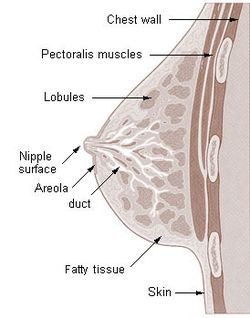
Insufficient glandular tissue, or hypoplasia, is one of the leading causes of primary lactation failure (failure to produce enough milk even though the baby's latch and suck are normal). While severity of IGT varies from person to person, an estimated 1 in 1000 mothers have IGT severe enough to preclude a full milk supply despite "doing everything right."

Image sourced at
http://en.wikipedia.org/wiki/Mammary_gland
Everyone develops the basis for functional breast tissue (milk sacks, ducts, etc) during the embryonic stage regardless of sex. During puberty, increased levels of estrogen cue the creation of extra fat, connective tissue, and some functional tissue. Pregnancy hormones ignite the proliferation of functional tissue: ducts, milk sacks, etc; by about the 16th week of pregnancy, the breast is a functioning gland. 

Those with IGT, however, have experienced an interruption in this process. While the exact cause is unknown, it is believed that this interruption takes place during puberty, whereby the body fails to develop the basis for glandular tissue. Without this basis, the breasts cannot adequately create and release milk.

This is not to say they will not produce some milk. Many mothers with IGT have the ability to produce breastmilk, just in insufficient quantities to sustain their babies. Again, severity varies from person to person, and treatment plans will vary based on severity as well as infant patterns.

What It Looks Like

The "typical" hypoplastic breasts will be tubular instead of rounded. They may be widely spaced, one
may be larger than the other. Some display a marked swelling in the areola. This image shows varying breast shapes; note varying markers of hypoplasia in types 2-4:

Image sourced at http://www.sallychapman.net/2013/05/hypoplasia.html
Many young women note during their teenage years that their breasts don't "hang" the way they should. While this is not a definitive symptom of IGT, it is a good idea to discuss concerns with a lactation consultant during pregnancy, especially if you have experienced little or no breast changes during pregnancy.

Why It Happens

It's not clear what, exactly, causes insufficient glandular tissue, but there are theories. Some experts believe genetic components may be at play. IGT expert Diana Cassar-Uhl suggests luteal phase defects may be a common cause: inadequate progesterone certainly could preclude the development of functional breast tissue. Others believe PCOS, obesity, a history of disordered eating, and other factors that alter hormone levels may prohibit sufficient development of glandular tissue.

What It Isn't

IGT is a lot of things. A few things it is not:
  • The same thing as having small breasts. Contrary to popular belief, small breasts do not, in fact, make breastfeeding more difficult. While women with smaller breasts have less storage capacity (and therefore may feed their babies more often), small breasts alone do not preclude the ability to make enough milk. While IGT mamas often have smaller breasts, hypoplasia is found across the spectrum of breast sizes.
  • A cop out/all in your head. I think I've put this myth to rest by now, yes? It's real, folks.
  • The end of your breastfeeding relationship. This is the biggest concern for IGT mothers, and while results vary, there are many things you can do to get the most milk for your baby. Many supplement their babies while breastfeeding, often all at once at the breast with a supplementer. And formula is not your only option: many families are able to access informally donated breastmilk in their communities to help sustain their little ones.
Treatment and Support

Since no two mothers are alike, the care plans for IGT vary from person to person. Seeing a lactation consultant during pregnancy (yes, before baby is even born!) will help you understand whether or not your breasts appear hypoplastic and give you a plan of action for when the baby comes. Then the best idea is to monitor signs of adequate intake and commence treatment for IGT as soon as you notice a problem. This may include herbs, prescription drugs, supplementation, frequent weight checks, etc.

After receiving clinical care from a lactation consultant, the most important thing is to surround yourself with support! There are countless mothers out there with IGT; finding a community with shared experiences is key to staying positive and feeling good about yourself and your infant feeding decisions. noteveryonecanbreastfeed.com has an amazing resource list, and I definitely recommend checking out the IGT and Low Milk Supply Support group on Facebook.

Lauren Guy
CD(DONA), IBCLC

Friday, May 10, 2013

Avoiding Mismanagement: Why you should see an IBCLC for lactation challenges

I cannot stress the number of times I've seen breastfeeding parents -- exhausted and at the end of their rope -- come into my office after perhaps weeks of troubleshooting and self-diagnosis. Often these are issues that, if caught early on and properly managed, would be fairly easy to fix. However, the delay between the onset of the problem and the point at which they arrive in my office often means the treatment will be longer and more involved.

We are very fortunate to have a wealth of breastfeeding resources. Not too long ago, new parents that struggled with breastfeeding literally had nowhere to turn, and the bottles of formula offered up by their pediatricians became necessary. Today, we have La Leche League, WIC Peer Counselors, and a variety of moms groups and doulas that specialize in breastfeeding support. While I cannot sing the praises of these resources loudly enough, occasionally a lactation challenge requires more than simple remedies and old wives' tales. And while La Leche League in particular has a protocol for referring parents to a qualified clinician, social mom's groups and meetups often do not.

A recent case in particular comes to mind. It was a first-time mother who had struggled from the beginning with a suppressed milk supply. She was hardly at risk for such a deficiency: healthy pregnancy, natural birth, and great support at home. But something -- for the life of me I could not figure what -- had thrown a wrench in the gears very early on.

So she sought advice from several very knowledgeable resources: her childbirth instructor, her doula, some friends, her mother, and the internet. But these remedies were to no avail, and by the time she got to me she was providing less than half of what her baby needed in breastmilk, the rest supplemented in formula.

It was truly this mother's determination to breastfeed her baby that got her through what had become a very serious milk supply issue. The individualized plan of care I provided combined with her willingness to do all the legwork brought her supply back to a level she felt good about, though I can't help but think she'd be off the supplement completely if I'd had the opportunity to work with her sooner.

Again I want to emphasize the appreciation I have for lactation-knowledgable support persons, be they nurses, doulas, childbirth educators, friends, etc. Time and time again this support -- and lots of it -- keeps new parents focused on achieving their infant feeding goals even in the face of difficult roadblocks. However, what has inspired me to sit here and write this today is my observation that sometimes these support resources keep parents from seeking out clinical support when it's needed.

Why does this happen? I do not think anyone intends to keep a breastfeeding mother from seeking proper care. I think it's just that we all want to help. It's the nature of birth workers, of nurses, of care-giving family members, of friends... we see a problem, we want to help. And it is very difficult, especially for us doulas with multiple certifications, to admit an issue might be beyond our management capabilities.

I do wish to point out, however, that there are people out there who provide services that they are not appropriately credentialed to provide. There are a number of non-IBCLCs in particular that advertise "lactation consultation", and while they likely offer invaluable support to many new parents, they may very well be operating beyond their scope. This often creates the very delays I describe above.

I listed breastfeeding certifications in a post several months ago. I encourage you to check out what those letter combinations mean, and most importantly, check the scopes of practice for each.

Many doulas and childbirth educators in particular also have the CLE, CLC, or CLS credential. This makes them valuable support resources. Folks who hold these certifications are qualified to tell you when things are going well and when they are not, to offer support and encouragement, and to teach basic troubleshooting techniques. However, they are in no way qualified to provide clinical management of any major breastfeeding challenge.

Which brings me to my original point: the IBCLC is the only credential recognized the world over to provide proper clinical management of all breastfeeding challenges. Though even us IBCLCs refer to more advanced clinicians when necessary; sending a patient to her midwife or obstetrician for a fluconazole script comes to mind here.

A quick note on accessibility: it is true that lactation consultation from an IBCLC is more expensive than an assessment from a doula (and it's certainly more expensive than the free advice found on Google). You should be aware, however, that lactation consultation and supplies are now covered under most health insurance plans when it is provided by an IBCLC or higher. Most hospital-based clinics will file for you, and my private practice provides a form for reimbursement. I am fortunate to work as an IBCLC at Peaceful Beginnings of the Triad, a private practice small enough to make sure you see the same lactation consultant for each of your visits. We pride ourselves on following up with you personally and offering continuity of care. We also host a weekly Breastfeeding Clinic for minor challenges and reassurance.

In other words, when you seek the support of an IBCLC, not only do you receive care provided by someone who's qualified to provide it, your insurance is more likely to cover the visit. And when you get proper support at or near the onset of a problem, the challenge will be more easily overcome and require fewer appointments. It's a win-win, and the best way to ensure you and your little one are receiving the care you deserve.

Monday, February 18, 2013

What's In The Bag?

A lot of folks ask me what I carry in my birth bag, so I thought I'd share this image from today as I was packing up for my upcoming birth.
 Now I'm not the kind of doula that spends the entire labor pulling tools and tricks out of my bag, but because labor can be so unpredictable, I find it's important to carry a lot of this stuff with me just in case. What I have includes (in no particular order):
  • Massage tools: Nukkles, an Omni ball, several sizes of balls inside of socks, heated "stones", a foot roller, and a hollow rolling pin.  
  • Bath pillow, fully sterilizable.
  • Stress ball and comb for accupressure/hand rolling
  • Covered kneeler pad (also washable)
  • Flip flops and a change of clothes for me (just in case)
  • Microwavable brley pack - both scented and unscented depending on client's preference
  • Massage oil, lotion, peppermint spritz, and several essential oils for light aromatherapy
  • A compact fan (a client favorite for transition and second stage)
  • Hair clips/pins and ponytail elastics
  • 5 Hour Energy (disgusting but effective)
  • Battery-lit LED candles
  • Extra lip balm for mama or me
  • Sustenance for me (I never want to look at a granola bar after a birth)
  • Extra toiletries for me
  • Birth ball (not pictured) and air pump
  • A "pull toy" for 2nd stage... this was an idea given to me by another doula several years ago
  • Medical gloves in case of roadside delivery (hasn't happened so far)
  • The Labor Progress Handbook (aka, cheat sheet)
  • Client file and numbers for me to call if I need to reschedule appointments
Again, I don't use 90% of this stuff during a single labor, but you never know!

....and it all fits into one bag!!

Saturday, February 16, 2013

To Encapsulate or Not To Encapsulate?

Placenta encapsulation has become increasingly popular in the natural birth community. Claims of lower postpartum depression, the replenishment of vital nutrients, even increased milk production permeate discussions in both mainstream and "crunchy" circles alike.

Placentophagia (the eating of one's placenta) is found in many mammalian species, though interestingly has not been recorded in human history and is only occasionally observed in the reproductive behaviors of our closest cousins. Anthropologists have failed to nail down the specific drive behind placentophagia, however, the hypotheses have become the mantras of today's placental encapsulation enthusiasts.

I'll say this: I'm a huge supporter of the practice. Not only do I believe it can potentially replenish your body's nutrients, I also believe in every person's right to do what they will with their bodies whether or not they're giving birth. If you have spent the better part of 40 weeks growing the organ that sustained your child in utero, it is understandable that you wouldn't want it to just be hauled off to the incinerator. Many families opt to take it home, bury it, save it in a freezer, or have it encapsulated. Encapsulating parents take the capsules like vitamins, and indeed the placenta is home to a number of beneficial nutrients that may aid postpartum recovery.

On just about every placenta encapsulator's website, you can find the following claims:
It is believed that consuming your placenta can:

  • Help to balance your hormones
  • Replenish depleted iron levels
  • Assist the uterus to return to its pre-pregnancy state
  • Reduce post-natal bleeding
  • Increase milk production – this has been proven in a study
  • Make for a happier, more enjoyable post-natal period
  • Increase your energy levels

Sounds pretty good, doesn't it?

As much as I hate to be a buzzkill, I must interject here that there is absolutely no methodologically sound research to back many of these claims (or demonstrate how consuming one's placenta would, say replenish iron levels better than a diet rich in heme iron). I wish there was such research, but unfortunately, the evidence of any of the above benefits remains largely anecdotal.

Deena Blumenfield at Shining Light Prenatal Education breaks down the issues with some of the commonly-held beliefs about placentophagia, noting specifically the questionable claims surrounding oxytocin and postpartum bleeding:
Yes, oxytocin is present in the placenta… but how much of it is destroyed during the cooking or dehydrating process.  No one knows because there are no studies on this.  How much of any of the hormones or nutrients are destroyed during cooking or dehydrating?  Again, no one knows.
Placenta is also used to control postpartum hemorrhage ... by cutting off a small piece of placenta and asking mom to suck on it, or eat it, as her care provider is trying to control the bleeding.  However, this is used in conjunction with other techniques, such as uterine massage, to control bleeding.  So where is the bleeding control coming from?
As a lactation consultant, I wish to specifically address the commonly-held belief that consuming your placenta can combat low milk supply because of its high levels of prolactin. It's shocking to see a number of people citing "a study" on placentophagia and prolactin levels when in reality no such study exists.  Let me rephrase... no such methodologically sound study exists.

The "study" put forth by most supporters of placentophagia is Soykova-Pachnerova et. al, Placenta as Lactagagon. The first thing I noticed about this study is that you can't find it anywhere... I sifted through page after page of placenta enthusiasts citing it, but couldn't locate a primary source at all.

The second thing I noticed about this study, once I found a reliable source with more details about it, is that it was conducted in 1954. It had an extremely small sample size, it was not performed with any kind of single- or double-blind method (in other words, participants knew whether they were being fed placenta or the placebo), and it did not control for outside factors (first gestation vs. subsequent, overlying health issues, etc). It has yet to be replicated. From those issues alone I am prepared to dismiss this research as bunk. Moreover, I am concerned with the number of folks claiming increased lactation from placentophagia has been "proven in a study."

Still, I find that the rationale deserves a closer look. While it is true that placenta contains lactogens (human placental lactogen, or hPL), hPL is slightly different from the prolactin (PRL) responsible for milk production. In fact - to totally nerd out on endocrinology for a moment -  it appears that the similar hPL molecules, along with progesterone, keeps the body's prolactin levels at bay until the placenta is delivered.[1]

Which brings me to my next point: even with lactogens present in placenta, can taking them orally cause one's prolactin levels to increase? For this to happen, lactogens (prolactin, etc) would need to have some sort of oral absorption capabilities.  Do they?

Unfortunately, the evidence seems to suggest they do not. While the body of research on this topic is also lean (and decades old), a well-controlled experiment conducted in 1979 found that the serum prolactin levels of lab rats were not effectively raised by the oral administration of prolactin. This study has also not been replicated, however, the conclusive nature of the results may contradict the need for further study.

Lastly, anecdotal evidence of better breastfeeding success and lower PPD is suspect in that it leaves many socioeconomic factors out of the equation. Consider location alone: the provider listings at PlacentaBenefits.info show that most placenta encapsulation specialists are localized to metropolitan areas, areas where there are also likely to be lactation consultants, peer support groups, friends close by, etc.

Now consider the economic factor. To my knowledge, placenta encapsulation is not covered by any insurance company (and definitely not Medicaid), with out-of-pocket costs ranging from $200 and up. If someone has the ability to pay that fee (especially after having a baby), they probably also have the ability to pay for a lactation consultant, a doula, a therapist, etc. They are more likely to be partnered and have well-paying jobs (which would denote higher education levels). These factors play major roles in breastfeeding success and postpartum depression risk alike; therefore, without research on placentophagia that controls for these factors, there is truly no way of knowing whether the placenta - not socioeconomic status - is what's lending these great results.

Regardless of all the suspicions I have about placentophagia being a "miracle cure," my opinion is that there are probably many benefits (mostly nutritional), and it is likely not harmful. There has been some concern over the 2011 study that found heavy metals present in placenta and cord blood, but those levels are likely a reflection of what the body has been exposed to anyway. I am not clear on whether or not re-consuming those metals will do any more damage, however, I would encourage you to speak with your midwife or doctor if that is a concern.

But unfortunately, the claims involving lower PPD and better milk supply seem to be anecdotal. I'll echo Blumenfield that I would love to see actual research. As someone who works with new parents as both a doula and lactation consultant, it would be great to find out that placentophagia does in fact have these miracle properties. In other words, I would love to be proven wrong.

Lauren Guy
CD(DONA), IBCLC

[1]Jan Riordan, and Karen Wambach, Breastfeeding and Human Lactation Forth Edition, (Sudsbury, Massachusetts: Jones and Bartlett Publishers, 2010), 88-90.


Wednesday, February 13, 2013

Hiring a Doula: A Doula's "Stats"

This is Part Three of a series on choosing the best doula for you and your family. Are there other topics you'd like to see addressed in this area? Email me at EfferenceDoula@gmail.com, or visit my Contact Form.

I always encourage my clients and friends alike to research their care provider's stats. As in, how often do they induce, what is their cesarean rate, etc? (This is also helpful to learn about their place for birth, which has fortunately become easy to find out.) 

In the past year or so, I have been asked more and more about my rates as a doula. As in, what percentage of my clients have epidurals? What percent have cesarean births? And so on.

There's really nothing wrong with this question, and I happily answer as I keep decent records of the births I attend. But what you may not realize is that these "stats" don't necessarily tell you anything about the person you're interviewing. It may give you limited information about the kinds of births the doula has attended, but seeing how medical decisions are 100% out of our hands, you may be surprised to learn that stats don't dictate how effective a doula will be for you.

Now granted, if a doula has attended 10 births and 8 have been cesareans, I would want to know a few more details as there are many factors that may influence this kind of rate: does she regularly assist in higher risk labors? Does she get a lot of referrals from care providers with high c-section rates themselves? Did she just have a string of strange outcomes that required the surgery? Regardless, are you comfortable with her limited experience with vaginal birth?

I would be less inclined, however, to inquire about her epidural rate, as this really tells you nothing at all about how "good" a doula is. The vast majority of women giving birth today plan on having an epidural at some point during their labor, and while a person hiring a doula is less likely to plan for that option, families hire doulas for many different reasons. In other words, there is no reason to assume that a doula with a 70% epidural rate is a "bad doula." You may, however, have questions about her lack of experience supporting folks through natural births, which is a legitimate concern.

One thing to remember when hiring a doula is that no topic is taboo. It's your birth, and you deserve to find a doula that you are comfortable with! But keep in mind what questions tell you and what they might not, and if you want additional detail, just ask!  We're always happy to offer some insight, even when you haven't hired us yet.

Speaking of sharing... in the interest of transparency, my stats:

(As of 2/13/13)
In the births I have attended:
  • 58.8% were first time mamas
  • 33.3% opted to have epidurals
  • 25% were induced
  • 8.3% were cesarean births 
  • 16.6% were born in water
  • Shortest gestation was 38w 0d
  • Longest was 42w 2d
  • Shortest labor was 2.5 hours from start to finish (45 minutes with doula in attendance)
  • Longest was 30+ hours (27 hours with doula in attendance)
  • Smallest baby was 5lb 14oz
  • Largest was 8lb 15oz
  • All babies healthy
  • All mamas an inspiration


Monday, January 21, 2013

Hiring a Doula: Certified vs. Not Certified

This is Part Two of a series on choosing the best doula for you and your family. Are there other topics you'd like to see addressed in this area? Email me at EfferenceDoula@gmail.com, or visit my Contact Form.


A common question I get at interviews is the question of certification. What is the difference between a certified doula and an uncertified doula?


The answers to this question are as varied as doulas themselves. First off, there's a difference in certifying organizations. While each organization has similar requirements and scopes, they may have slightly different focuses. The larger certifying organizations include:
I am certified through DONA International, the largest of the above organizations. My certification process included the following:
  • Attend either a series on childbirth education or a day-long seminar on the process of normal labor and birth.
  • Attend a weekend-long training (minimum 16 hours) on labor support.
  • A self-study of a minimum of five books.
  • Attend a breastfeeding class (minimum 3 hours)
  • Attend a minimum of three births as the primary doula, totaling at least 15 hours of provided labor support, receiving evaluations from the parent, nurse, and midwife/obstetrician.
  • Create a comprehensive resource list for expectant/new parents.
Entangled in this process is a whole host of workshop fees, membership fees, material costs, etc. That being said, the monetary expense of certification alone may be prohibitive to many. Some doulas choose instead to just pay for the labor support workshop and leave it at that, or even learn skills on their own. Others certify for a period of time, but they choose to let their certifications expire when they no longer see the value in maintaining them. Some communities (Greensboro included) have volunteer doula programs with lower-cost trainings, such as the one provided by our local YWCA. Some organizations provide scholarships to minority groups who will be creating low-cost doula networks in their areas; still, I have heard these scholarships are difficult to come by.

This is the key difference between "uncertified doulas" and "doulas working towards certification." While uncertified doulas may have all the training and experience of one who has certified (and therefore similar fees), doulas working towards certification are less experienced but generally offer their services at a much lower rate.

In other words, a doula who chooses to forgo the certification process is as capable of being a strong supportive presence at your birth as one who is certified. Certification does provide a certain "authenticity," there is a clear scope of practice as dictated by the certifying organization, and maintaining certification requires us to stay abreast of new research and techniques. If this is important to you, you might want to choose a certified doula. If this is not as important to you, you trust your doula to be honest about her training and experience, and you find an uncertified doula that really clicks with your family, then hiring an uncertified doula may be the right option for you.

I have chosen to maintain my certification with DONA because I personally value the credential. But others may not (or they may not have the means to get it). No matter what the reason, there is no doubt in my mind that you could receive wonderful labor support from an intentionally uncertified doula just the same as one with letters after her name.


Sunday, January 6, 2013

Hiring A Doula: How To Interview A Prospective Doula

This is Part One of a series on choosing the best doula for you and your family. Other topics you'd like to see addressed in this area? Email me at EfferenceDoula@gmail.com, or visit my Contact Form.

I've been to several interviews recently where I was the first doula the family had ever spoken to. While they obviously knew what a doula was and what we do, they were unsure of additional questions to ask. Listed below are several things you might want to ask a potential doula during your initial consultation.
  1. "Tell me about your training/education." An easy starting question, this will give you an idea of your potential doula's expertise, plus a look at how we came to call ourselves Doulas.
  2. "Are you certified?" Less important than you might think (see a more in-depth look at certification next week), a lot of families desire a doula that holds a certain credential.
  3. "How many births do you attend per month?" This is a very important question because obviously, babies don't always come when it's convenient! If your doula takes on more than one client per month, be sure to ask if she has a backup in case of overlaps. If continuity of care is important to you (i.e., you definitely do not want her to send her backup), you may choose a doula that has a smaller client load.
  4. "Do you offer anything besides labor support?" While this is not always important to expectant families, a growing number of doulas have multiple areas of expertise. If you would prefer a doula that also specializes in massage therapy, belly casting, placenta encapsulation, breastfeeding support, or one who rents birth tubs, this is a good question to ask. Many provide these services at a reduced rate to their birth clients.
  5. "What is your fee, and how is it paid?" A doula's fee varies by experience, credentialing and location. Many require a deposit to be paid at the time of hire. Be sure to ask about reimbursement in the event that she fails to provide services. Lastly, if her fee is prohibitive to you, don't be afraid to ask for a reduced rate; many doulas take on lower-cost clients when they can, and can at the very least refer you to someone who may be able to meet your needs.
  6. "Do you have experience with _____?" Do you have special considerations that would narrow your search? Some expectant parents want a doula that has experience with specific scenarios such as VBAC, waterbirth, multiples, pregnancy after loss, or just attending births with a specific care provider. Any special consideration that you would like your labor support person to know about, just ask.
  7. "Why did you decide to become a doula?" This is a favorite topic of conversation, as all answers will vary slightly. While nearly all of us got into it because of our passion for birth, we all come to the table with different backgrounds that influence how we'll answer this question, giving you a better idea of who we are on a personal level.
  8. Anything else you think is important! Have them clarify what, exactly, they do prior to and during labor. Will they accompany you in the event of a c-section? An epidural? How will they work alongside your significant other? Ask about their personal experience giving birth, if that is important to you. Very few topics are off limits for your average doula.
If at any point you feel your interviewee does not meet your specific needs, don't be afraid to ask for referrals. Our area has a vibrant and diverse doula community that is generally non-competitive and desires the best fit for all expectant parents.


Wednesday, December 12, 2012

Got the flu? Don't stop nursing!!

You don't have to tell me it's flu season... my supposedly "great immune system" was no match for this bug I've been battling for the past few days. It seems everyone and their mother has come down with some kind of cold or flu bug, and new mothers - their immune systems weakened by a recent birth and subsequent exhaustion - are at risk.

If you have yet to catch the bug, the CDC recommends the flu shot for pregnant women and mothers of infants under 6 months of age. The vaccine is fully compatible with breastfeeding and pregnancy. Though adverse effects have been wildly hyped, a 19-year review by the CDC in conjunction with the Vaccine Adverse Effect Reporting System found "no unusual patterns of pregnancy complications or fetal outcomes" in pregnant women receiving a seasonal flu vaccine. Of course people have legitimate concerns regarding injections during pregnancy, and I'm certainly not qualified to make benefit/risk assessments, so I'd encourage you to discuss any safety concerns with your care provider.

A question I've been getting a lot lately is, if you get the flu, should you quit breastfeeding to avoid exposure to your child?

The answer to this is a vehement no! And here's why.

For one, there's a chance you've been contagious since before you had any symptoms, and even if you weren't, it's highly unlikely that nursing is the only close contact you're going to have with your baby unless you're somehow able to pass off all caregiving responsibilities to someone else. Influenza is extremely contagious, and simply living in the same house with someone who's infected puts your baby at risk.

Even more importantly, if you have caught the flu, your body is busy producing a wealth of antibodies against that specific strain, antibodies that readily pass through your milk to your baby. I can't tell you how many times I hear a story about every adult and child in a family coming down with the flu, but the one breastfed baby makes it through the season without ever showing a symptom despite her/his immature immune system. If baby does become ill, breastfeeding will provide current antibodies to facilitate a quicker recovery. What's more, a baby nursing actively from her/his mother is getting other benefits conducive to healing: skin-level antibodies, plenty of hydration on demand, warmth, comfort, and pain relief.

A sick baby is very stressful and can be scary, and don't let flu-like symptoms go unexamined; if you believe your child is getting sick, consult your health care provider for complete treatment and diagnosis. But remember, breastfeeding will provide comfort and closeness to help you both make it through the season. Just keep nursing!!

Lauren Guy
CD(DONA), IBCLC


Friday, November 2, 2012

The Pacifier Question


I can't tell you how many times I've been working with a new parent when they sheepishly tell me that their baby uses a pacifier. Often it's an admission they don't even want to make, assuming lactation consultants are intensely anti-pacifier, or worse, that using one means they're failing as parents.

So I want to take this opportunity to officially state that I am in no way against the use of pacifiers! What's more, I want to dispell the myth that lactation consultants believe that all of baby's sucking needs should be taken care of at the breast and that mothers who use a fake nipple aren't "doing it right."

I can see no reason why a baby who is breastfeeding well and gaining weight shouldn't be given a pacifier for non-nutritive sucking. Babies, especially very young babies, have an inherent need to suck. It's very comforting to them, and it doesn't always indicate a need to eat. Babies who have gastroesophageal reflux (GER) often benefit from sucking on a pacifier between feedings, and there is sound research that suggests that pacifier use may reduce the risk of SIDS.

Regarding feelings of "ineffective parenting," I would encourage you to relax and ground yourself in reality. While new mothers are often hyper-pressured to exceed attachment parenting guidelines in meeting their baby's needs, allowing your body to be baby's pacifier simply may not be appropriate for your lifestyle. For one, many mothers experience severe nipple pain/trauma from non-nutritive sucking (sucking without making a milk transfer). Others simply cannot be there to meet their babies' sucking needs 24/7. There is no reason to feel guilty about using a pacifier to calm your baby when you can't be there to do so yourself; while parenting certainly requires a high amount of selflessness, you're not going to be able to be an effective caregiver if you've given away all of your personhood in the first year of your baby's life!

On the other side, mothers are often told that acting as baby's pacifier will "spoil" them and impede their independence. This is also a completely unfounded notion; there is absolutely no evidence that responding to a baby's needs on demand will in any way contribute to an unhealthy dependence on their mother. If a mother has no nipple pain, then there is no reason not to forgo the pacifier for more breast time if it fits into mom's lifestyle and desires.

My only recommendation for pacifier use is that parents wait at least three weeks before introducing them or any other artificial teat (unless supplementation with a bottle is indicated, as directed by a lactation consultant). I recommend this for several reasons. For one, I want parents to learn how to read their babies' cues. Are they hungry, or do they just need to suck on something? This learning tends to take several weeks as parents adjust to having a new baby around. Secondly, the first two weeks after birth is critical in establishing mother's milk supply for the long term. If the delicate dance of supply and demand is interrupted by early pacifier use, mom's supply could suffer. Lastly, while true "nipple confusion" is rare, I do like to see babies demonstrate that they have gotten the hang of breastfeeding (generally, they get back to their birth weight in two or three weeks) before putting anything else in their mouths. This is especially true for babies who for whatever reason were slow to start or had any difficulty getting a grasp on feeding from the breast (pun totally intended).

Using a pacifier for your baby's non-nutritive sucking needs is nothing to be ashamed of or worried about. As a parent, you are capable of making the best decisions for you and your baby, and so long as your baby is nursing well and gaining weight, there is no reason to avoid pacifiers if you wish to use one.


Thursday, November 1, 2012

Breastfeeding Credentials, At A Glance


You know those letters after a doula's name that don't necessarily have to do with being a doula? Often those are credentials from different (but related) organizations and may indicate a specialty in a number of birthy areas: childbirth education, massage and bodywork, breastfeeding support, placenta encapsulation, nursing, etc.

There are many credentials that revolve around lactation, which can often be confusing when an already-exhausted family is searching for the right kind of support. Each of the below certifications qualifies one to offer a certain level of breastfeeding support, however, the IBCLC is the only credential that is qualified to provide clinical assessments and address the full scope of lactation challenges.

The following list lays out what each certification means, how one certifies, and the scope of practice associated with each.
IBCLC - International Board Certified Lactation Consultant - This is a clinical credential that requires 1000+ hours of required study, education and training culminating in a once per year international exam given by IBLCE. IBCLCs must recertify every 5 years, and every 10 must retake the exam. These clinicians work in hospitals, birth centers, out of their homes, and in private practices. They perform complete evaluations and assessments of both mother and infant and create individual plans of care, working hands on with all breastfeeding challenges as well as more complex health issues.

RLC - Registered Lactation Consultant - This credential is used in conjunction with IBCLC within the United States.

CLE - Certified Lactation Educator - CLEs have completed a 20-hour course on breastfeeding support and completed approximately 25 additional hours of out-of-class coursework which culminates in a certificate of completion from CAPPA. CLEs are trained to teach breastfeeding classes and answer basic breastfeeding questions, however, they must refer out to IBCLC for more complex cases and are not trained for hands on consults.

CLC - Certified Lactation Counselor - CLCs have completed a 45 hour course of education, culminating in a certificate of completion, sometimes after completing an end-of-course exam, from The Center for Breastfeeding. They are trained to counsel on normal breastfeeding situations and troubleshoot minor challenges, however, they must refer out to an IBCLC for more complex cases and are not trained for hands-on consults.

CLS - Certified Lactation Specialist - Similar to CLC, CLSs certify through Lactation Education Consultants by attending a 45-hour course and completing an end-of-course exam. They are trained to educate, support, and counsel mothers on normal breastfeeding situations, however, are not qualified to perform hands-on consults or administer clinical plans of care.

BEC - Breastfeeding Educator Certification - Those who hold a BEC have completed an intensive course of study with Birth Arts International. Prospective BECs complete a lengthy in-classroom or self-study course on the science of lactation, anatomy and physiology, pedagogy, sociology, medical terminology, and counseling. They must also complete 600 hours of supervised lactation support in varying clinical settings in their communities.  The BEC certification is community-specific and qualifies students to teach, support, and educate the public on breastfeeding and related issues and policies.

BC - Breastfeeding Counselor - A relatively new organization, Breastfeeding USA certifies mothers to lead free, highly accessible support groups for breastfeeding mothers. They answer questions regarding normal breastfeeding situations, offer tips for troubleshooting challenges, and refer out to IBCLC support when indicated.

LLLL - La Leche League Leader - La Leche League International is the oldest breastfeeding support organization in the country, now offering support groups all over the world. LLL leaders receive a multitude of training in normal breastfeeding situations, offering tips for troubleshooting challenges, and know when to refer out to IBCLC support. Offers mom to mom support in a casual and accessible environment. Many IBCLCs started as LLL Leaders.

WIC Certified Breastfeeding Peer Counselor - WIC CBPCs are employed by state WIC offices and provide support to breastfeeding mothers who qualify for WIC at no additional cost. While the requirements vary state by state, WIC Peer Counselors are mothers who have breastfed themselves and have completed comprehensive study in breastfeeding management, counseling, cultural diversity, and education.


Wednesday, October 3, 2012

The Childless Doula

In the very beginning of my doula career (about three years ago now), it wasn't uncommon for someone to raise an eyebrow when they found out that I was a doula yet had no children of my own. And in a way, I understand where they were coming from: it is true that most doulas - at least from what I've experienced personally - came to the work after having children themselves. To some, the experience was beautiful and positive, maybe even involving a doula, and they want to help other families have the kinds of births they had.  To others, it's the opposite: they had negative experiences, felt unsupported or just plain clueless, and want to keep other women from being that way. 

I've engaged in a few conversations (some heated) on the matter of "The Childless Doula" on online forums for birth professionals. While some contributors were complimentary that there were so many young faces in their area's doula communities, others were either skeptical or outright dismissive of the idea.  I've even been passed up by potential clients because of my parental status. 

On a purely superficial level, their criticism makes sense: what can someone who has never experienced childbirth themselves really contribute to someone else's birth? But following that logic takes you to obviously irrational places, such as whether or not you'd have brain surgery by someone who's never had a tumor, or hire a family therapist who has never seen a counselor themselves. I played this defense on loop for a while, until finally I realized that if my parental status mattered that much to someone, then their preferences were legitimate and I was not the right doula for them. Some moms-to-be want motherly doulas for personal reasons that they can't really verbalize, but their preference is valid nonetheless.  Some even going so far as to want a doula that has had a similar birth experience they are anticipating (planned cesarean, VBAC, home birth, pregnancy after loss, etc).  Fortunately, our doula community here in the Triad is incredibly diverse and varied, and there's probably a doula to fit everyone's needs and desires.

But getting back to me, The Childless Doula. I came to this work for reasons becoming more common, more common in fact that I'm starting to get the raised eyebrow less and less.  Miriam Perez says it better:

"We all come to this work for different reasons. Until recently, most of the doulas I encountered were parents themselves–their childbirth experience, whether positive or negative, inspired them to serve others during pregnancy and childbirth.
Now I see a different group coming into this work. Young people without children but with a passion for health activism are finding doula work and see it as a new way to channel their desire to engage in direct service or direct action. Books and documentaries about maternal health in the U.S. have in­spired many people.
The common thread throughout all these experiences ... is unconditional and nonjudgmental support. That is the essence of doula work."

Because of this continuing trend, I get the parenthood question less and less.  People meet me, they sense my passion and energy, and they decide if I'm a good fit for them regardless of whether or not I'm also a mother. For many, the question of parenthood doesn't even enter into the equation.

The raised eyebrow reappears when people find out that I'm on the fence about having kids of my own at all.  It's not completely out of the question, but considering my divorce last year and my continued commitment to my education, I'm reluctant to even consider any intention to have a baby of my own at this time.

That doesn't change my passion for supporting women and their families through what is by far the most intense and awe-inspiring event in the world. Doulas come to the work for a variety of reasons, and as we grow we find new reasons to keep going.  I may have gotten into the work as a move to turn my feminist activism inward, but I continue to do it for reasons that I'm still trying to make sense of. To be sure, part of the work is indeed "the ultimate feminist act," but other parts transcend feminism and pretty much any other "-ism" you can name. And as any of my clients could tell you, it transcends parental status as well.


Saturday, September 8, 2012

Get Yer Freak On. Doula's Orders

The first thing people do when they find out you're a doula (other than asking what the heck that is) is tell you their birth stories.  Which I love, but they very often end with, "So then I had a c-section, and did I really need one?"  Um, I dunno.  I wasn't there, and if I was, I wouldn't exactly have the authority to say.

The second thing people do is ask about some old wives' tales surrounding birth.  The favorite of mine is always, "Is it true that having sex can bring on labor?"  And let me tell you, the answer is yes.
But why?


Oxytocin, the so-called "love hormone," is at least partly responsible for three distinct physiological events in a woman's reproductive life: orgasm, labor, and breastfeeding. As a sex-positive doula and lactation consultant , you might say that oxytocin is my homegirl.

The female orgasm was once thought of as relatively inconsequential to the reproductive process.  In fact, some fertility specialists have even suggested that orgasm "dilutes" a woman's chance of becoming pregnant.  Au contraire, says a bulk of new-ish research that essentially reaffirms what lay-health workers have been saying for years: orgasm increases your chances of conception.  See, when a woman orgasms, her body releases even more vaginal secretion than she does when simply "aroused," helping to lubricate the sperm's path to the egg.  Additionally, the oxytocin released via orgasm contracts the uterus, lowering the cervix (the "neck" of the uterus) and making the uterus more accepting of a fertilized egg (ever wonder what that tight feeling in your lower abdomen was?).

So oxytocin contracts the uterus.  Hence, it may help tip your body into labor.  But the wonder-hormone's job isn't over when the placenta is delivered.  Oxytocin is also responsible for the milk "letting down" during breastfeeding.  See, when a woman first lays eyes on her baby, she's essentially OD'ing on oxytocin, as is baby.  That's the love hormone doing its job.  Baby will hopefully find her/his way to a nipple and begin suckling.  When the nipples are stimulated, oxytocin is released from the posterior pituitary gland, contracting the tiny myoepithelial cells inside the milk ducts, forcing milk out of the breast and into baby's mouth.  That oxytocin release is still doing it's job "down there," helping mama's uterus to clamp down post-delivery, thus reducing risk of excessive postpartum bleeding.

I mention the connection to breastfeeding because oxytocin is also released with nipple stimulation.  Women who enjoy nipple stimulation during sex may enjoy it for a number of reasons, but physiologically it's because that burst of oxytocin contracts the uterus (which essentially puts interior pressure on the clitoris and, well, you get it).  In other words, if you enjoy nipple stimulation, include that in your labor-inducing sex practice.  Otherwise you can just turn on your breast pump when you're finished, and you will probably get many of the same benefits.

If a woman is having sex with a man, he may play a labor-inducing role as well.  Semen contains prostaglandins, autocrine hormones that help to soften ("ripen") the cervix.  A softer cervix makes the fertilization/implantation process more likely, but these hormones work the same when a woman is already pregnant.  The low dose of prostaglandins in semen alone aren't likely to induce labor in a woman who's not yet term (which is why care providers don't warn against sex during pregnancy unless a woman is at risk for preterm labor), but the mild softening in a term mama might just be enough to tip her into labor mode.  As an added bonus, his penis hitting against the cervix may indeed induce some mild (but not earth-shattering) uterine contractions.

Captain Obvious moment: I generally don't recommend the prostaglandin method if a mama is in a relationship where she's at risk for a sexually transmitted infection.  The last thing she needs is to be infected with an STI right before a baby comes through her vagina!  If infection is a concern, sex with a condom still contains the benefits of oxytocin and cervical pressure.  Masturbation is a safe and effective alternative for women who don't have a partner (or just simply don't want to engage in partner sex).  Again, oxytocin is stronger than prostaglandins!

So yes, good sex can in fact induce labor.  In other words, if you're trying to get labor started, just get yer freak on.  Doula's orders.
 
Lauren Guy
CD(DONA), IBCLC
 

Saturday, September 1, 2012

Welcome!

Greetings, readers!

Welcome to Spiraling Outwards, a venue where I can share birthy news and research while adding some commentary and "doula slant".

I almost didn't start a blog at all. It's tricky business for us doulas. Most of us tow the line between being non-judgmental and highly opinionated on an almost daily basis. We want to be able to present information without a whole lot of bias, giving our clients factual information to help them make decisions that are going to work for them, not us. But given the long, drawn-out rants I've been attaching to reposts on my Facebook page as of late, I decided to just go ahead and attach my business name to a blog.

I have another personal blog, and I also write for RH Reality Check and other related reproductive health news and commentary sites. However, those tend to deal with reproductive health issues that don't always have to do with childbirth and breastfeeding, though I may cross-post some of those here. I am a very political person in my "non-doula" life, and while that's just an inherent part of who I am, I try to keep things more or less apolitical in the birthing room; this goes back to my desire to be the doula for every kind of person, regardless of background, religious belief, political affiliation, etc. So don't expect things to get terribly "polarizing" here.

Comments are more than welcome, as is sharing any content in full or part (with proper credit, of course). All I ask is that people remain respectful. Comments containing hate speech or oppressive language will be promptly deleted (if you don't know the difference between non-oppressive language and just plain "political correctness", a brief primer is available here). I may also remove comments that cite bunk research... sorry, but that's just a big pet peeve. So that's about it. Welcome to Spiraling Outwards!!